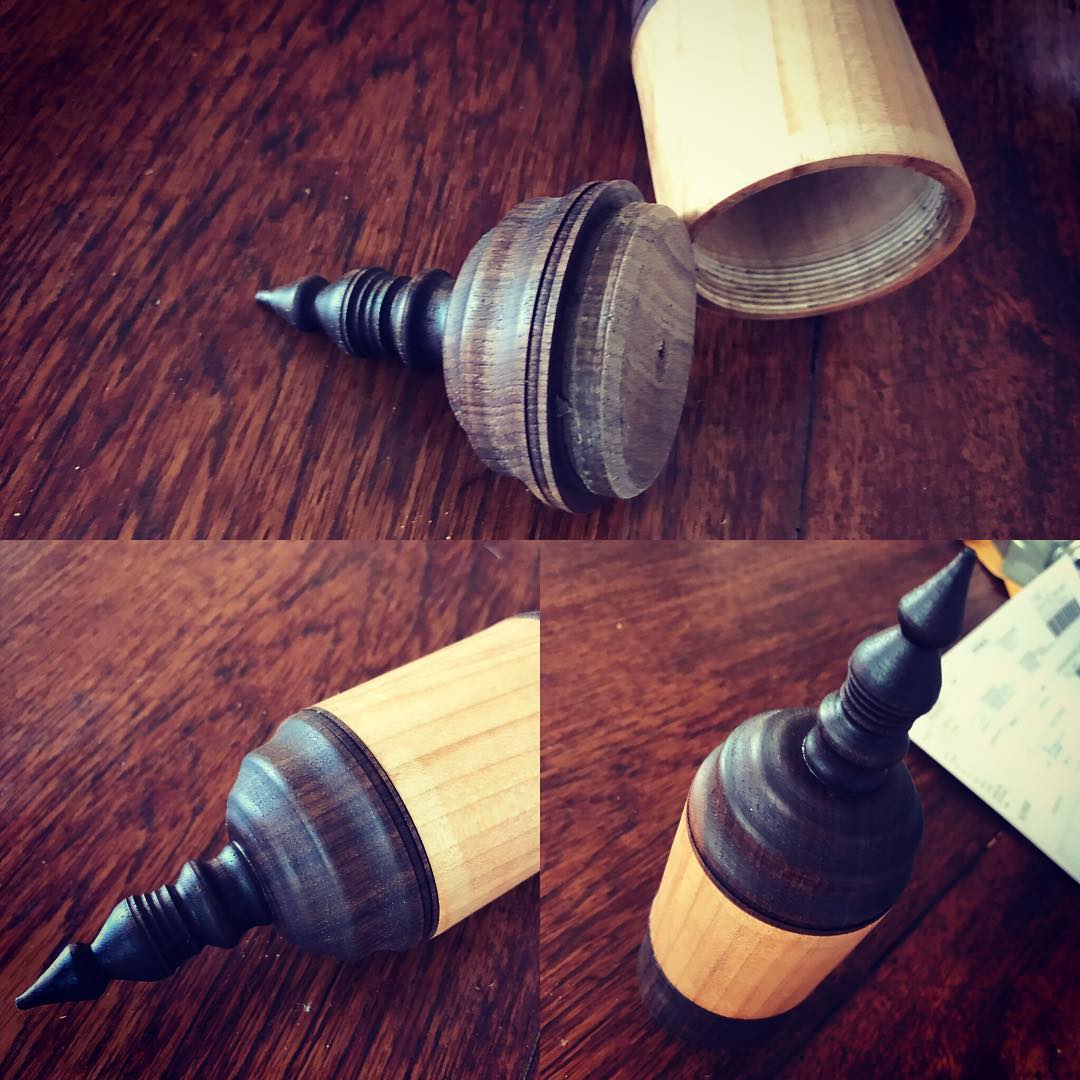
Another turned-box experiment with freehand chased threads
Creative and Custom Wood Work, Carlton OR
If you read our first post on green (freshly cut) wood , you’d have got a sense for why green wood is an interesting medium with which to work. In this post we’ll get into some more detail regarding what we have learned.
Initially, our interest in green wood had to to with the relative affordability of the medium. Green wood is essentially unseasoned firewood. If one prepares it correctly, it can become a beautiful piece of work. If not, it still works as fire wood. It’s great for learning.
What we learned from getting and processing a bunch of green wood follows:
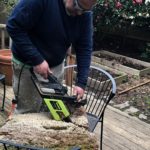
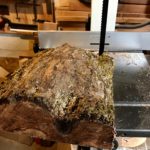
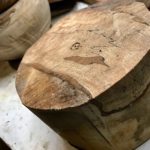
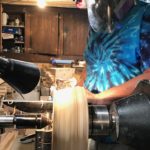
If this seems like a lot of detail, it is. It is also a process that master woodworkers know intuitively, and which we are trying to learn. Some of what old times wood workers do is art. Some of it is science. And, some of what they do maybe pointless superstition. A part of the fun and challenge of what we are doing is sorting through all of the preceding to come up with our own understanding on how to work with wood.
A couple of useful resources:
Something we have learned from working with wood over the past year is that working wood takes time. That may seem odd, but there’s a cadence and a rhythm in making things with wood that one ignores at one’s peril. Instant gratification is not an option.
Recently, we have started working with green (freshly harvested, unseasoned) wood. This is a departure from the more-or-less-straight-and-flat, kiln dried wood, that we were using previously. Even with that, rushing things is not advisable. It’s unsafe. Both the wood and oneself need to relax.
So, what the difference? There are several, but here’s a little peek.
#1: Green wood is wet. It still contains most of the moisture in the tree since it’s been freshly cut. It needs to dry out, be seasoned, before it can be used — unless one wants to specifically use effects of the drying process.
Most of the wood one encounters in furniture has been kiln dried. Some of the more expensive custom furniture may have air dried wood (if it has steam bent elements, for example), but that’s increasingly rare these days. It takes approximately a year per inch of board thickness for wood to dry out. Yes. A year.
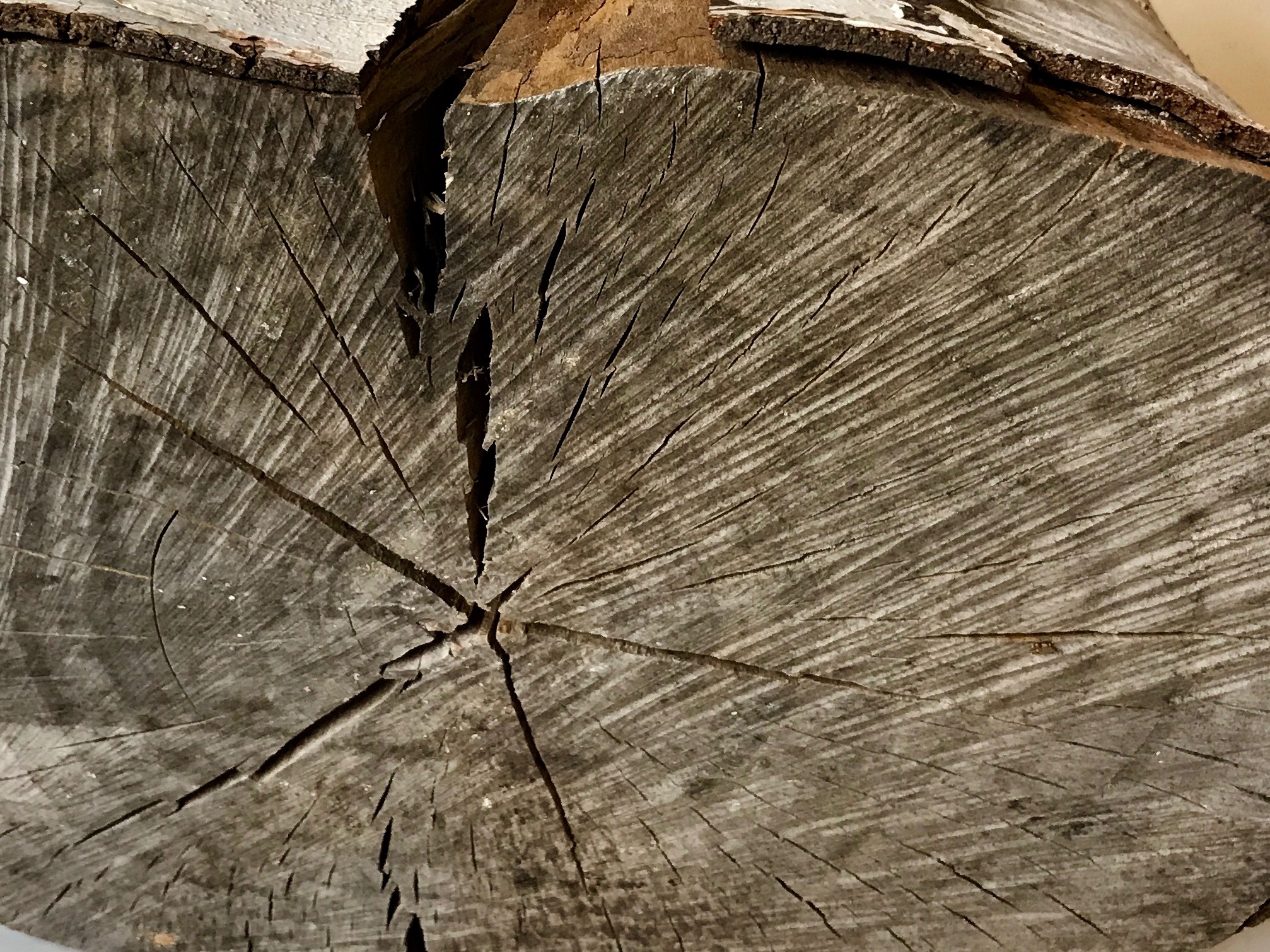
Dry the wood too fast, and it warps and checks (cracks or splits). Dry the wood too slowly, and it may spalt — i.e. start rotting. We have another post on spalting to read if you wish.
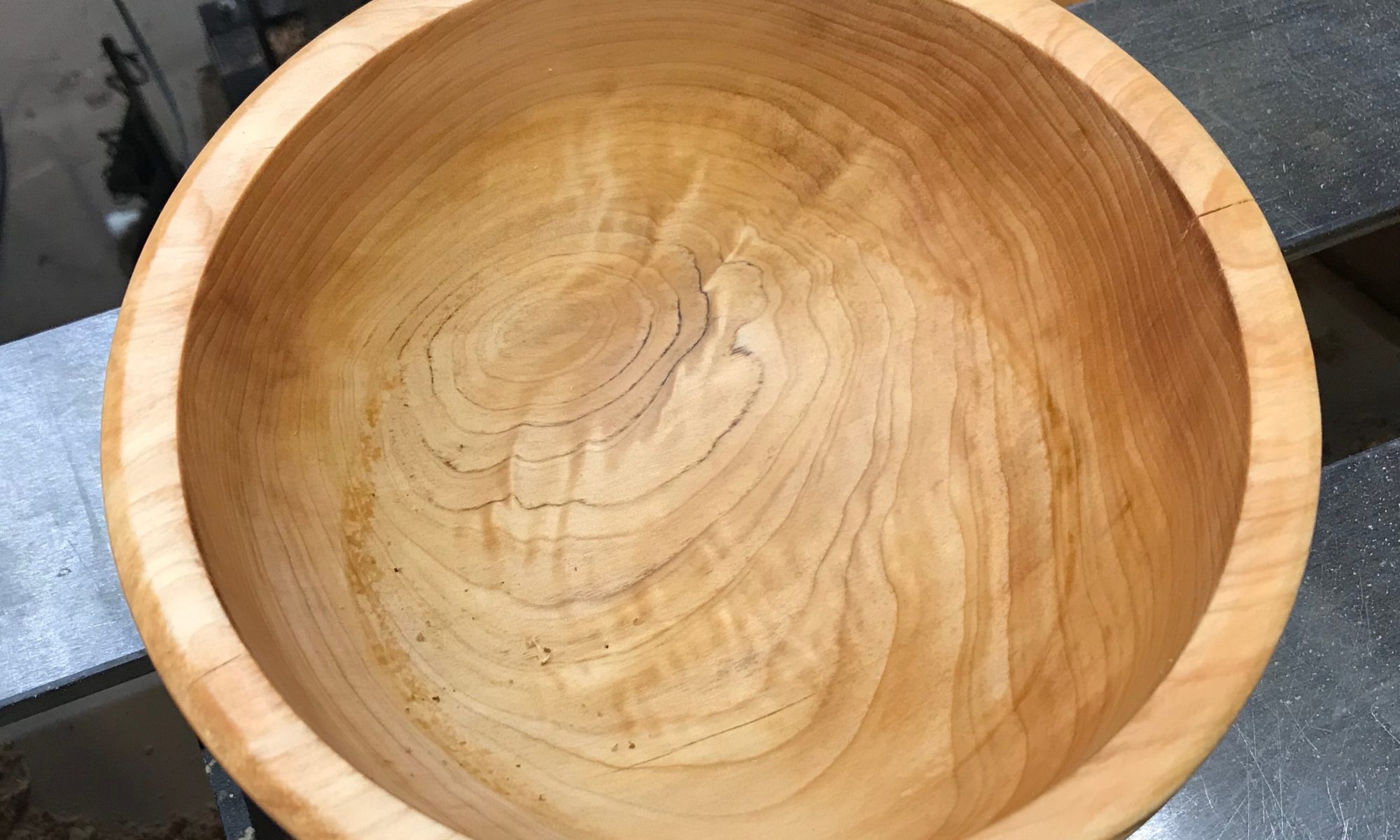
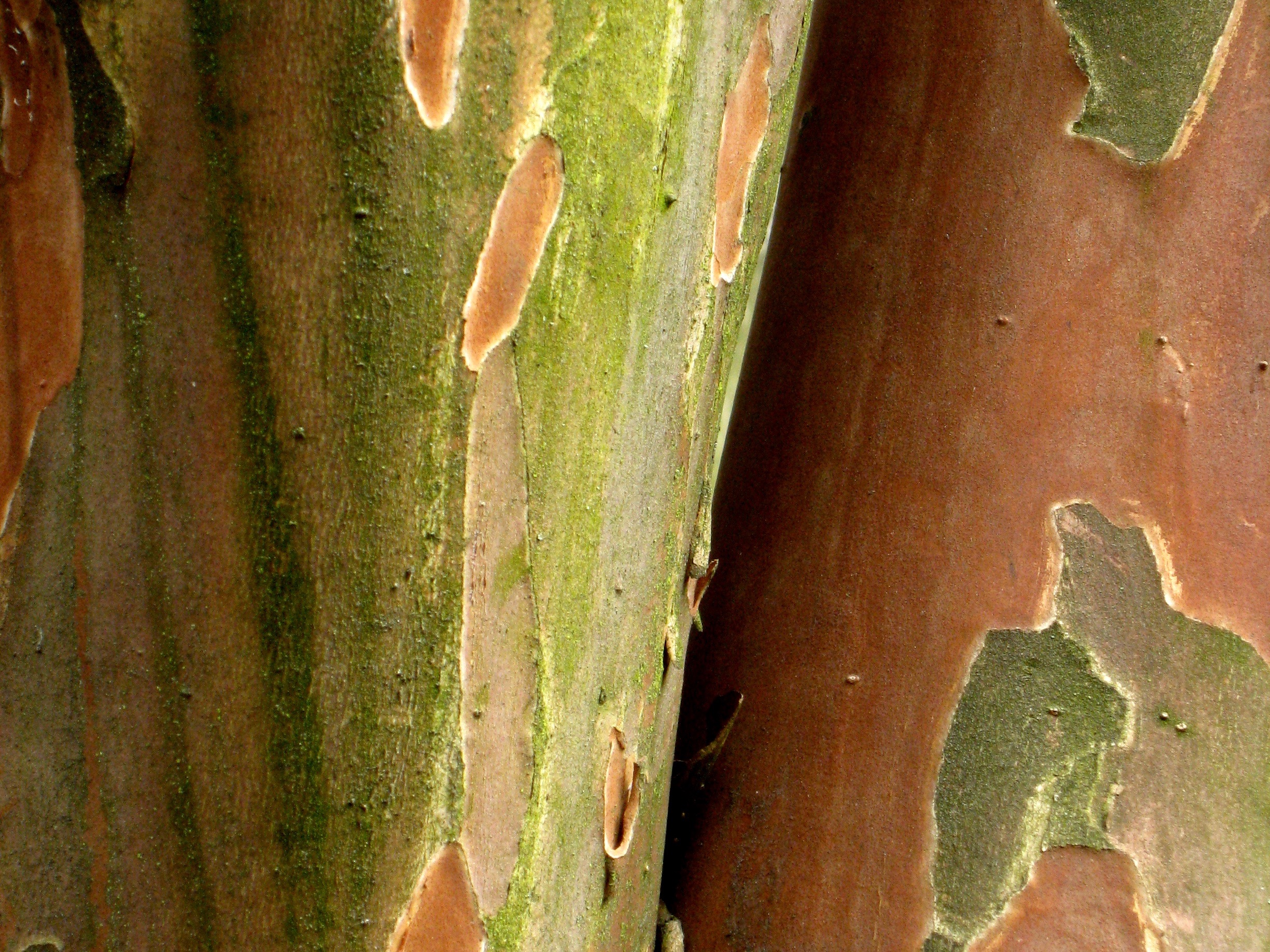
#2: Green wood offers greater mechanical and artistic flexibility. Like people, trees are all different. They have different life experiences. Trees express their experiences in their physical structure. For example, a constantly wind blown tree will have asymmetric growth rings. a wet spring will yield broader growth rings, a scar may turn into a knot or a burl. Working with green wood offers the opportunity to “read” the underlying structure and use it as a design feature for either it mechanical or aesthetic properties.
Features like knots, burls, bark, grain, and spalting (undesirable for mass produced lumber) can be quite beautiful if integrated into the design of a workpiece. To a woodworker, the opportunity is to “read” the tree’s story and cast a “defect” (or anomaly) in a way that makes the tree’s life experience into something special — think Cindy Crawford’s mole. In a finished product, the defects and anomalies can be polished vignettes of the trees experience the make a work piece special. Yes, it’s geeky, but kinda cool at the same time.
#3: Green wood costs less than seasoned wood. Think of wood like wine. There is an optimal age at which the wood should be used. Fresh pressed wine like fresh cut wood is relatively inexpensive. Most people nominally season it and use it as fire wood. Let it age and season, and … well … the price can go up significantly.
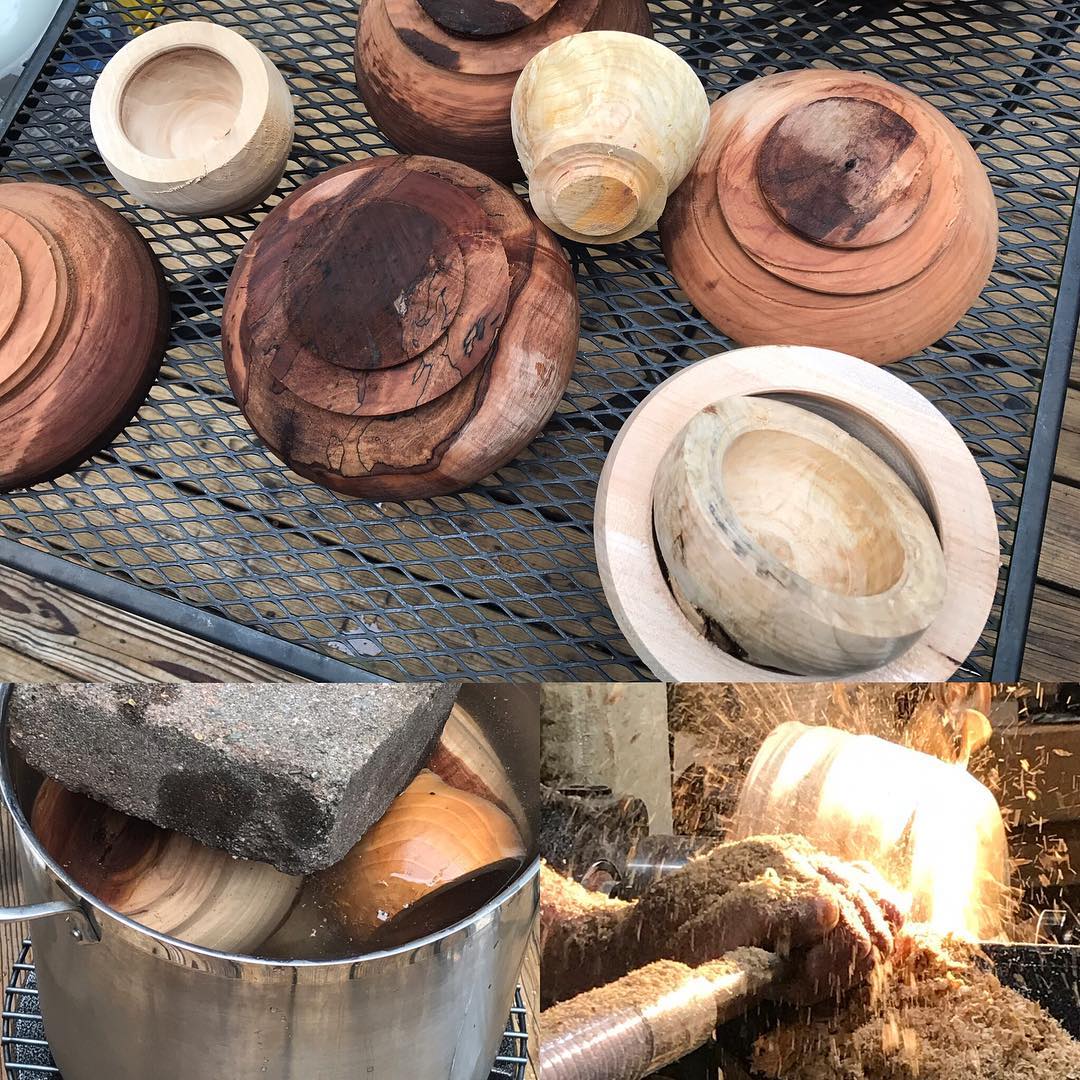
We’ve started using green wood, mostly for turning things like bowls. The benefit to doing this is we are able to find wood at a good price (or sometimes free), and learn from it. We get to learn how to highlight the little things that made the part of the tree we have unique. It also allows us to manage the seasoning process to benefit the final work product.
All of the preceding is way more detail that we thought we would ingest. It does, however, offer a connection to something real, tangible, and a world that most people never get to experience. We hope you’ve enjoyed this little peek into what we are doing. Stay tuned for more on what we are making, and how we do that.